
Diploma in NNC.0E: Music Business Administration
The music industry is a dynamic environment that is in constant flux, and recent developments in technology have created exciting opportunities for artists and entertainment companies (e.g., record labels, music publishers, production companies, concert promoters, app developers, etc.).
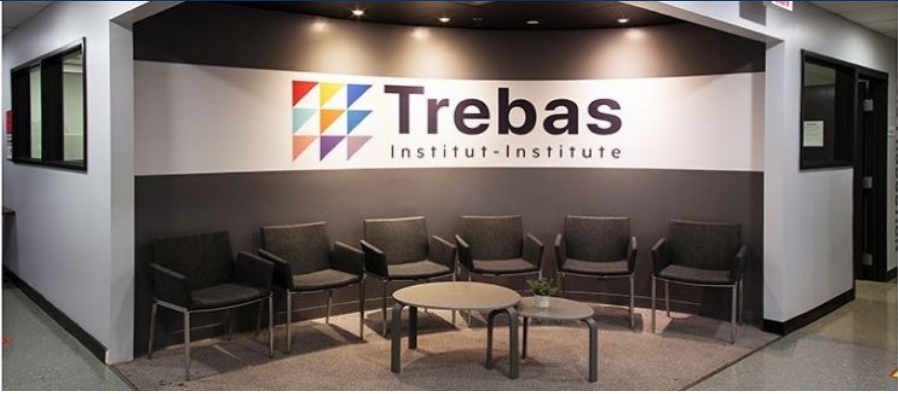
The Music Business Administration program at Trebas Institute provides world-class training to anyone wanting to launch a successful career in the music industry. Whether you are an entrepreneur thinking about starting your own business, or an artist wanting to take control of your career, our cutting-edge curriculum is designed to provide you with all of the tools and experience necessary to succeed.
Campus Information
Montreal
Trebas Institute is located in the heart of Montreal, a cultural metropolis in North America.
Intakes
- Jan
- May
- Sep
Application Processing Time in Days: 20
Minimum English Language Requirements
| English Level Description | IELTS (1.0 -9.0) | TOEFL IBT (0-120) | TOEFL CBT (0-300) | PTE (10-90) | |
|---|---|---|---|---|---|
| Expert | 9 | 120 | 297-300 | 86-90 | |
| Very Good | 8.5 | 115-119 | 280-293 | 83-86 | |
| Very Good | 8 | 110-114 | 270-280 | 79-83 | |
| Good | 7.5 | 102-109 | 253-267 | 73-79 | |
| Good | 7 | 94-101 | 240-253 | 65-73 | |
| Competent | 6.5 | 79-93 | 213-233 | 58-65 | |
| Competent | 6 | 60-78 | 170-210 | 50-58 | |
| Modest | 5.5 | 46-59 | 133-210 | 43-50 | |
| Modest | 5 | 35-45 | 107-133 | 36-43 | |
| Limited | 4 | 32-34 | 97-103 | 30-36 | |
| Extremely Limited | < 4 | < 31 | < 93 | < 30 |
Job Opportunity Potential
Post-production is a rewarding and exciting career for individuals who are technologically savvy and have a knack for storytelling. You’ll spend your time bringing the ideas of directors and producers to life through careful editing, the application of sound effects and music, and ensuring smooth transitions between scenes. However, before a production company lets you start working on their films and programs, you’ll need to acquire a range of skills and experience that evidence your capabilities and knowledge of post-production.
Your career goals
Before applying for job roles or internships, you need to think about which specific role you want to pursue in post-production. Are you interested in adding sound to films? Being a sound editor might be the role for you. Or are you more focussed on how films are created? If so, you could think about becoming an editor to ensure film shots are put together in a succinct way. Whatever you’re interested in, do some research into the role to get an idea of the skills you’ll need to gain.
You’ll also need to ensure you create a CV and a good portfolio, one that really showcases your education, skills and your passion for a career in post-production. Worried about getting started? Trebas Institute’s student services department can offer you access to our Job and Internship Advisor who will provide you with the right tools for success! This is a free lifetime service.
Trebas Institute also organizes an annual job fair which allows students and employers to meet and is a great opportunity to hear from industry professionals. You can also learn more about the roles available to you once you graduate.
Work experience and networking
A big part of working in post-production is having the right experience and a good network. As such, use holidays and any free time that you have to pursue work experience. Apply to production companies in your local area and offer to intern for the summer. This will not only get your name out there but will also give you something to add to your CV. You’ll be pleased to discover that the faculty at Trebas Institute can provide you with employment and internship opportunities.
You should also attend as many free events as you can. Go to launches and networking events where you’ll meet people who work in the industry; speak to them about their jobs and take an interest in what they’re working on. When you apply to work at their companies, they might remember you! You’re also not limited to attending events in the country or city you live in. Conduct some research to find a range of online events and webinars that can provide you with guidance on breaking into the post-production industry and allow you to hear from experienced professionals.
PSW Opportunity
Eligibility for Post-Graduation Work Permit (PGWP):
Graduated from a designated learning institution (DLI) in Canada.
Desire to stay in Canada temporarily for work.
Important Note:
Graduating from a DLI doesn't automatically qualify you for a PGWP.
Validity of PGWP:
Depends on the length of the study program or the expiry date of your passport, whichever comes first.
Duration of PGWP Based on Study Program Length:
Less than 8 months (or 900 hours for Quebec credentials): Not eligible for PGWP.
At least 8 months (or 900 hours for Quebec credentials), but less than 2 years: PGWP may be granted for the same length as the study program (e.g., a 9-month program results in a 9-month PGWP).
2 years or more: PGWP may be valid for 3 years.
Completion of Multiple Programs:
PGWP may combine the lengths of each program if:
Each program is PGWP eligible.
Each program is at least 8 months (or 900 hours for Quebec credentials) in length.
Important Restriction:
You cannot obtain a PGWP if you already had one after completing an earlier program of study.
Admission Requirement / Eligibility Criteria
Under the provisions of section 4 of the College Education Regulations concerning the conditions of admission, a person who has received instruction considered sufficient by the college and meets any of the following conditions may be admitted to a program of studies leading to an Attestation of College Studies:
The person holds a Secondary School Vocational Diploma.
The person has interrupted his or her full-time studies or pursued full-time postsecondary studies for at least 2 consecutive terms or 1 school year;
The person is covered by an agreement entered into between the college and an employer or by a government program of studies;
The person has interrupted his or her full-time studies for one term and pursued full-time postsecondary studies for one term; or
Specific admission criteria for an ACS/AEC
A person applying for an ACS/AEC program must have sufficient written and spoken proficiency in the language of instruction. A person who has studied outside of Quebec must provide the result of a proficiency test for the language of instruction.
For programs where the language of instruction of English, the language proficiency tests accepted are:
International English Language Testing System (IELTS): 5.5
IELTS for Bangladesh, Bhutan, India, Pakistan, Nepal, Sri Lanka, Afghanistan: 6.0 with 1 Band 5.5
Test of English as a Foreign Language (TOEFL) IBT: 55
Cambridge English Language Assessment: 162
Canadian Academic English Language (CAEL): 40
PTE Academic: 36
Duolingo: 105 for students from South Asia (India, Sri Lanka, Bangladesh, Afghanistan, Bhutan, Nepal, and Pakistan) and 95 for all other countries
For programs where the language of instruction is French, the following standardized tests are accepted:
Diplôme approfondi de langue française/Diplôme d’études en langue française (DELF)/(DALF): Levels B1
Test d’Évaluation du français adapte pour le Québec (TEFaQ): Levels B1
Test de connaissance du français pour le Québec (TCFQ): Levels B1
- Course Type: Full Time
- Course Level: Under Graduate Diploma or Certificate
- Duration: 01 Year
-
Total Tuition Fee:
13700 CAD
Average Cost of Living: 22895 CAD /year
Application Fee: N/A
Similar Programs
- Diploma in Film & Television Production at Trebas Institute
- Diploma in Film & Television Production and Post-Production at Trebas Institute
- Diploma in Audio and Video Post-production at Trebas Institute
- Diploma in Audio Engineering & Production/DJ Arts at Trebas Institute
- Diploma in Sound Design at Trebas Institute