
Bachelor of Arts (BA) in Communication Studies
Communication Studies may be defined as the study of the processes and effects of interpersonal and mass communication involving the production, reception, and human processing of aural, verbal and visual messages in their cultural contexts.
The interdisciplinary program has been developed in response to the recognized need for graduates who understand the processes, effects, and cultural implications of communication in the Information Age.
The revolution in information and communications technology has wrought profound changes in the way we experience the world and conduct our social, political and commercial affairs. It has produced more powerful systems of mass communication than have ever been seen before, which manipulate the ways in which we impart and receive information, and influence the ways in which we construct our individual and collective identities. It has resulted in a globalized economy with new pressures for increased understanding of intercultural communication, as well as the implications of modern technology and media for commercial and political interactions. Above all, it has introduced new interfaces with technology that affect every one of us in our daily lives.
Campus Information
Dunedin
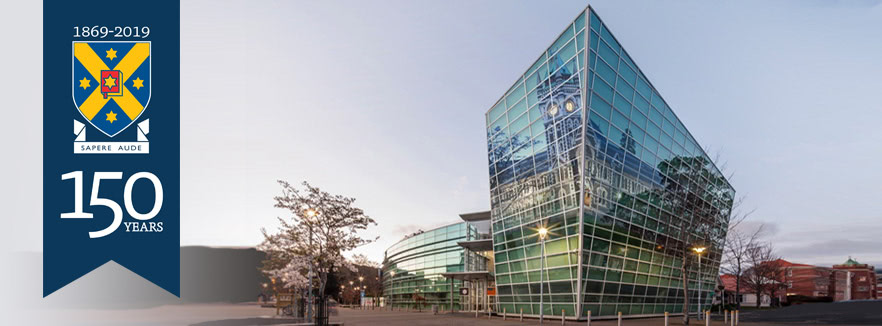
The University of Otago main campus is located in Dunedin. The Dunedin campus includes: Central administration Four academic divisions: Business, Health Sciences, Humanities, Sciences
Intakes
- Jan
- July
- Sep
Application Processing Time in Days: 30
Minimum English Language Requirements
| English Level Description | IELTS (1.0 -9.0) | TOEFL IBT (0-120) | TOEFL CBT (0-300) | PTE (10-90) | |
|---|---|---|---|---|---|
| Expert | 9 | 120 | 297-300 | 86-90 | |
| Very Good | 8.5 | 115-119 | 280-293 | 83-86 | |
| Very Good | 8 | 110-114 | 270-280 | 79-83 | |
| Good | 7.5 | 102-109 | 253-267 | 73-79 | |
| Good | 7 | 94-101 | 240-253 | 65-73 | |
| Competent | 6.5 | 79-93 | 213-233 | 58-65 | |
| Competent | 6 | 60-78 | 170-210 | 50-58 | |
| Modest | 5.5 | 46-59 | 133-210 | 43-50 | |
| Modest | 5 | 35-45 | 107-133 | 36-43 | |
| Limited | 4 | 32-34 | 97-103 | 30-36 | |
| Extremely Limited | < 4 | < 31 | < 93 | < 30 |
Job Opportunity Potential
We encourage all students – including International students – to make use of the career resources available on our website. From exploring your career options to specific job search strategies, you’ll find the information you need to establish your future career. You’ll also find information on this page specifically targeted at International students.
Get help with:
Career planning: Explore your career and study options
Job Applications: CV and cover letters, interview skills and applying for work
Gaining Experience: Get the ‘right’ skills, enhance your Otago experience… and volunteer.
Finding Employment: Job search strategies, career events and looking for work
Speak to a career adviser one-on-one if you need further assistance.
Enhance your employability
The graduate job market is competitive – good grades alone may not be enough to get your ideal job. You’ll also be expected to possess excellent English language skills, and be able to demonstrate a range of work-related skills and personal qualities relevant to the job. Develop the required skills through:
Work experience – gain part-time work, voluntary work, summer placements, or internships
Extracurricular activities – get involved in activities outside your course such as student societies and sporting clubs
Academic activities – show your capabilities by, for example, leading a group project or being a student representative for your course
PSW Opportunity
- During study, all students on a student visa can work up to 20 hours per week during semester and full time during vacations.
- After completing Level 7 Bachelor’s Degree or Higher Qualification, a student will get a three years open post-study work visa.
- After completing Level 8 Post Graduate courses of 1 year, students get 1 year PSW.
Admission Requirement / Eligibility Criteria
- International Baccalaureate: IB Diploma with a minimum of 24 points.
- Cambridge International Examinations (CIE) GCE Advanced Levels: minimum Numerical Score of 8.
- The numerical scores are normally calculated on the best three A-Level principal subjects (excluding the General Paper) taken at one sitting, or two A-Level passes with two A-Level Subsidiary passes at one sitting.
- (i) Scores for the Advanced levels are calculated on the basis that: A = 5, B = 4, C = 3, D = 2, E = 1
- (ii) Scores for the Advanced Subsidiary level results are calculated on the basis that: A = 2.5, B = 2, C = 1.5, D = 1, E = 0.5
- The numerical scores are normally calculated on the best three A-Level principal subjects (excluding the General Paper) taken at one sitting, or two A-Level passes with two A-Level Subsidiary passes at one sitting.
- Satisfactory completion of one year's study at an approved tertiary institution.
Minimum overall average of 75% in the All India Senior School Examination (CBSE) or Indian School
Certificate Examination (CISCE) with a minimum of 70% in English. The scores are calculated on the
best four academic subjects excluding local languages and non-academic subjects.
One year of successful study at a recognised institution of university standing, or successful
completion of a New Zealand Foundation Year programme
IELTS
IELTS score of 6.0 in the academic module (with no individual band below 5.5)
IELTS Indicator test
This is an online version of the regular IELTS test, made available due to COVID-19 testing centre restrictions.
Paper-based TOEFL
Score of 550 (TWE 4.5)
Internet-based TOEFL
Score of 80 (writing 20)
TOEFL iBT Special Home Edition
This is an online version of the regular TOEFL iBT test, made available due to COVID-19 testing centre restrictions
Cambridge Certificate in Advanced English (CAE)
Overall score of 176 (with no individual band below 169)
Pearson Test of English (PTE) Academic
Overall score of 58 with no communicative skills score below 50.
70% in English for the All India Senior School Certificate (CBSE) or the Indian School Certificate (CISCE).
- Course Type: Full Time
- Course Level: Bachelors/UG Degree
- Duration: 03 Year
-
Total Tuition Fee:
102753 NZD
Average Cost of Living: 20000 NZD /year
Application Fee: N/A
Similar Programs
- Bachelor of Science (BSc) in Geographic Information Systems at University of Otago
- Bachelor of Music (MusB) in Composition at University of Otago
- Bachelor of Arts and Commerce (BACom) at University of Otago
- Bachelor of Music (MusB) in Studio Production at University of Otago
- Bachelor of Music (MusB) in Performance at University of Otago
- Bachelor of Arts (BA) in Global Studies at University of Otago